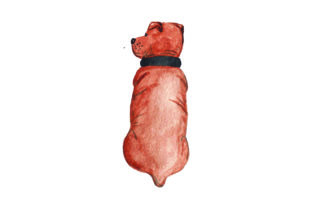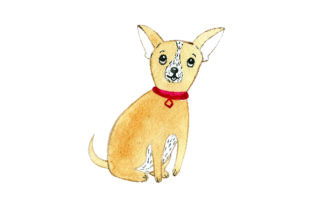
Chihuahua - Watercolor: A Designer's Review
As a designer who has spent years curating machine embroidery designs for both personal craft projects and commercial small business lines, I approach every new file with a critical eye. The market is flooded with generic Dogs patterns, but finding one that balances artistic flair with technical reliability is rare. Today, I am evaluating the Chihuahua - Watercolor design to see if it holds up under the scrutiny of real-world stitching. This isn't just about whether the image looks good on a screen; it is about how it translates into thread, fabric, and a finished product that customers will love.
First Impressions: Artistic Flair Meets Stitching Reality
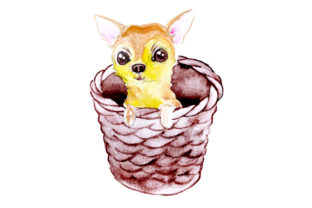
When I first loaded the Chihuahua - Watercolor into my digitizing software, the visual personality immediately stood out. Unlike the bold, blocky outlines often found in standard pet portraits, this design leans heavily into soft gradients and fluid shapes. It captures the spirited essence of a Chihuahua without relying on rigid geometric lines. For an Etsy seller or boutique owner looking to elevate their brand beyond basic clip art, this aesthetic offers a distinct advantage. It feels curated, modern, and slightly whimsical.
The layout suggests a design that thrives on flow rather than density. In traditional machine embroidery design, heavy fill stitches can sometimes make a project look stiff. Here, the watercolor effect implies a lighter touch, likely utilizing varied stitch directions and perhaps some running stitch techniques to mimic brush strokes. This makes me optimistic about its performance on softer fabrics where heavy stitching might cause puckering.
Testing the Waters: A Real-World Tote Bag Scenario
To truly understand the potential of Chihuahua - Watercolor, I imagined a specific use case: a custom embroidered tote bag for a local dog rescue fundraiser. Tote bags are a staple for craft businesses, but they present unique challenges due to the woven texture of canvas. If the stitch density is too high, the needle struggles to penetrate the thick weave, leading to skipped stitches or thread breakage.
In this scenario, the watercolor style of the Chihuahua would be a perfect fit. Because the design relies on blending colors rather than sharp, solid blocks, it would likely sit beautifully on the textured surface of a cotton tote. The soft edges would soften the rigidity of the canvas, creating a handmade feel that mass-produced prints cannot replicate. Customers buying these as personalized gifts would appreciate the artistic nuance, seeing it as a statement piece rather than just a utility bag.
I also considered using this design for sweatshirt embroidery. Placing the Chihuahua - Watercolor on the chest of a fleece hoodie could create a cozy, nostalgic vibe. However, because fleece has a nap, the direction of the fibers matters. The flowing nature of the watercolor effect would help mask any slight inconsistencies in the fabric pile, whereas a highly detailed, intricate line drawing might get lost in the fuzz.
Navigating Technical Challenges and Fabric Choices
While the artistic merit is high, every designer knows that execution depends on preparation. There are specific situations where Chihuahua - Watercolor requires careful handling. First, consider the hoop size. Watercolor effects often require negative space to breathe. If you attempt to shrink this design down to fit a 4x4 hoop, the delicate color transitions may become muddy, and the character of the Chihuahua could be lost in a blur of thread.
Fabric choice is equally critical. On very thin or stretchy fabrics like jersey knit, the weight of the thread could distort the shape. I would strongly advise using a cutaway stabilizer to maintain the integrity of the design during the wash cycle. Additionally, while the watercolor look is beautiful on light backgrounds, applying it to dark fabric requires strategic planning. You would need a dense underlay or a white backing layer to ensure the pastel tones pop. Without proper contrast, the subtle hues of the watercolor effect might disappear entirely against a black shirt.
Another area of caution is the curved surface of caps. Embroidery on hats already introduces distortion due to the dome shape. A complex, multi-colored design like this one might suffer from registration issues if the cap hooping system isn't perfectly aligned. For a beginner, a simpler embroidered patch version of this design might be safer to apply to a hat than direct stitching.
Maximizing Value for Your Craft Business
For the small shop owner or digital product seller, the value of Chihuahua - Watercolor lies in its versatility and perceived quality. In the world of commercial embroidery, customers are increasingly seeking items that look handcrafted yet durable. This design bridges that gap. When used on items like pillow covers, tea towels, or nursery decor, it elevates the perceived value of the finished product.
A well-executed watercolor design signals attention to detail. It tells the customer that you care about aesthetics, not just functionality. This builds customer trust and encourages repeat business. If you are selling digital embroidery files, this type of design appeals to hobbyists who want to create professional-looking results without needing advanced digitizing skills themselves. They buy the confidence that the file will run smoothly and look great.
However, before listing this design for sale or using it on a large batch of merchandise, you must verify the licensing terms. Ensure you have the right to sell physical goods made with this embroidery file. Some licenses restrict the number of items you can produce or prohibit selling the digital file itself. Always check the fine print to protect your business.
Practical Steps Before You Stitch
Before committing to a final product, I always follow a strict testing protocol. Here is my checklist for bringing Chihuahua - Watercolor to life:
- Test on Scrap Fabric: Never skip this step. Run the design on a scrap piece of the exact fabric you plan to use. Check for puckering, thread tension, and color accuracy.
- Check Thread Color Contrast: The watercolor effect relies on subtle shifts. Ensure your thread palette matches the intended gradient. If the contrast is too low, the details will vanish.
- Review Stitch Density: Zoom in on the preview. Are there areas where the stitches are too close together? This can lead to thread bunching, especially on textured fabrics.
- Confirm Hoop Size: Make sure the design fits comfortably within your hoop without stretching the edges, which can distort the image.
- Inspect Small Details: Look closely at the eyes and ears of the Chihuahua. These focal points need to be crisp. If they appear blurry in the preview, adjust the settings or choose a larger size.
- Use Proper Stabilizer: Whether it is tear-away, cut-away, or water-soluble, the right stabilizer is non-negotiable for maintaining the shape of the design.
- Create Mockups: Use printable mockups to visualize the design on different products. Test it in black and white to see if the structure holds up without color cues.
Final Thoughts on Design Utility
The Chihuahua - Watercolor design is a standout option for those looking to add a touch of artistic sophistication to their embroidery projects. It moves away from the cliché and offers a fresh take on the beloved Dogs category. Whether you are making a holiday gift, decorating a baby blanket, or stocking your online shop with unique apparel, this design has the potential to impress.
Its success, however, hinges on the designer's ability to match it with the right materials and techniques. By respecting the nuances of the watercolor style and preparing your workspace accordingly, you can turn this digital asset into a tangible masterpiece. As we continue to push the boundaries of what machine embroidery can achieve, designs like this remind us that technology and artistry can work hand in hand to create something truly special.